Kinematic Theory and Implant Design
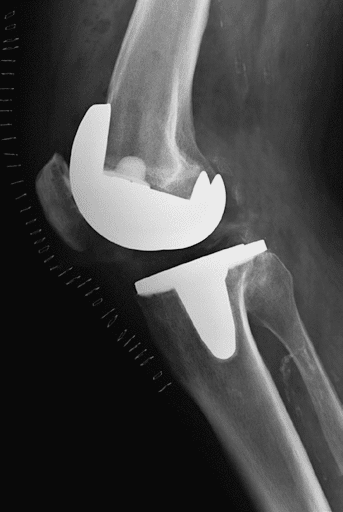
The Evolution® Knee System restores function by replicating the natural AP stability and Medial-Pivot motion of the knee[1],[2].
1) Dennis DA, Komistek RD, Mahfouz MR, Haas BD, Stiehl JB. Multicenter determination of in-vivo kinematics after total knee arthroplasty. Clin Ortho Relat Res. 2003
2) Freeman MA, Pinskerova V. The movement of the knee studied by magnetic resonance imaging. Clin Orthop Relat Res. 2003;(410):35-43.
1) Dennis DA, Komistek RD, Mahfouz MR, Haas BD, Stiehl JB. Conventry award paper: multicenter determination of in vivo kinematics after total knee arthroplasty. Clin Orthop Relat Res 2003;416:37-57. ,br>2) Schmidt R, Komistek RD, Blaha JD, Penenberg BL, Maloney WJ. Fluoroscopic analyses of cruciate-retaining and medial pivot knee implants. Clin Orthop Relat Res 2003;410:139-47.
3) LaMontagne M, et al. Quadriceps and Hamstring Muscle Activation and Function Following Medial Pivot and Posterior Stabilized TKA: Pilot Study.
4) Advance® Medial-Pivot was preferred over PS, PCL, and mobile bearing prostheses; preferred equally to the ACL-PCL design. Pritchett JW. Patients prefer a bicruciate-retaining or the medial pivot total knee prosthesis. J Arthroplasty. 2011 Feb;26(2):224-8.
Anterior knee pain
As the femoral component of a traditional implant design slides forward in early flexion, the added force causes the extensor mechanism to attempt to stabilise the knee during activities. This force eventually causes pain by tiring the extensor mechanism.
Loss of quadriceps performance
As the extensor mechanism tires, patients begin using a quadriceps avoidance gait to adapt to the weakening extensor, which can lead to pain.
In order for patients to compensate for the instability and pain, the quadriceps must continually contract in order to prevent the femur from sliding forward. Patients ultimately waste much of their quadriceps performance attempting to compensate for this instability.
Slower functional recovery
Evolution® Medial-Pivot knee achieves higher patient satisfaction than other total knee replacement designs on the market and shows a lower 30 days readmission rate and complications than traditional knee replacements[1],[2].
“My patients that have had the Evolution Knee seem to get back to a normal degree of function more rapidly.”
– Dr. David Backstein MD, MEd, Toronto, ON
1) Van Overschelde PP, Fitch DA. Patient satisfaction at 2 months following total knee replacement using a second generation medial-pivot system: follow-up of 250 consecutive cases. Ann Transl Med. 2016;4(18):339. doi:10.21037/atm.2016.08.41
2) Cassard et al, Outpatient TKR — 30 days readmission rate and complications, Full Function Faster meeting, London, 2018.
The Evolution® Medial-Pivot knee system is built upon a legacy of 95% patient satisfaction[1] with 98.8% survivorship at 17 years[2], and features a design that enhances quadriceps efficiency[3], allowing for improved proprioception.
1) Van Overschelde PP, Fitch DA. Patient satisfaction at 2 months following total knee replacement using a second generation medial-pivot system: follow-up of 250 consecutive cases. Ann Transl Med. 2016;4(18):339. doi:10.21037/atm.2016.08.41
2) Based on a retrospective study of Advance® Medial-Pivot. Macheras, G.A.; Galanakos, S.P.; Leptsos, P.; Anastasopoulos, P.P.; Papadakis, S. A. A long term clinical outcome of the Medial Pivot Knee Arthroplasty System. The Knee 24 (2017): 447-453.
3) LaMontagne M, et al. Quadriceps and Hamstring Muscle Activation and Function Following Medial Pivot and Posterior Stabilized TKA: Pilot Study.

Designed with a single radius in all planes, and a medial “socket” on the insert, the Evolution® Medial-Pivot Knee System provides stability throughout all phases of flexion and significantly decreases Anterior/Posterior translation.

The unique design of the Evolution® Medial-Pivot insert substitutes for both the ACL and PCL, as well as the natural contours of the knee to promote normal kinematics and normal feeling.
– Dr. Russell Nevins MD, Las Vegas, NV
* required fields